

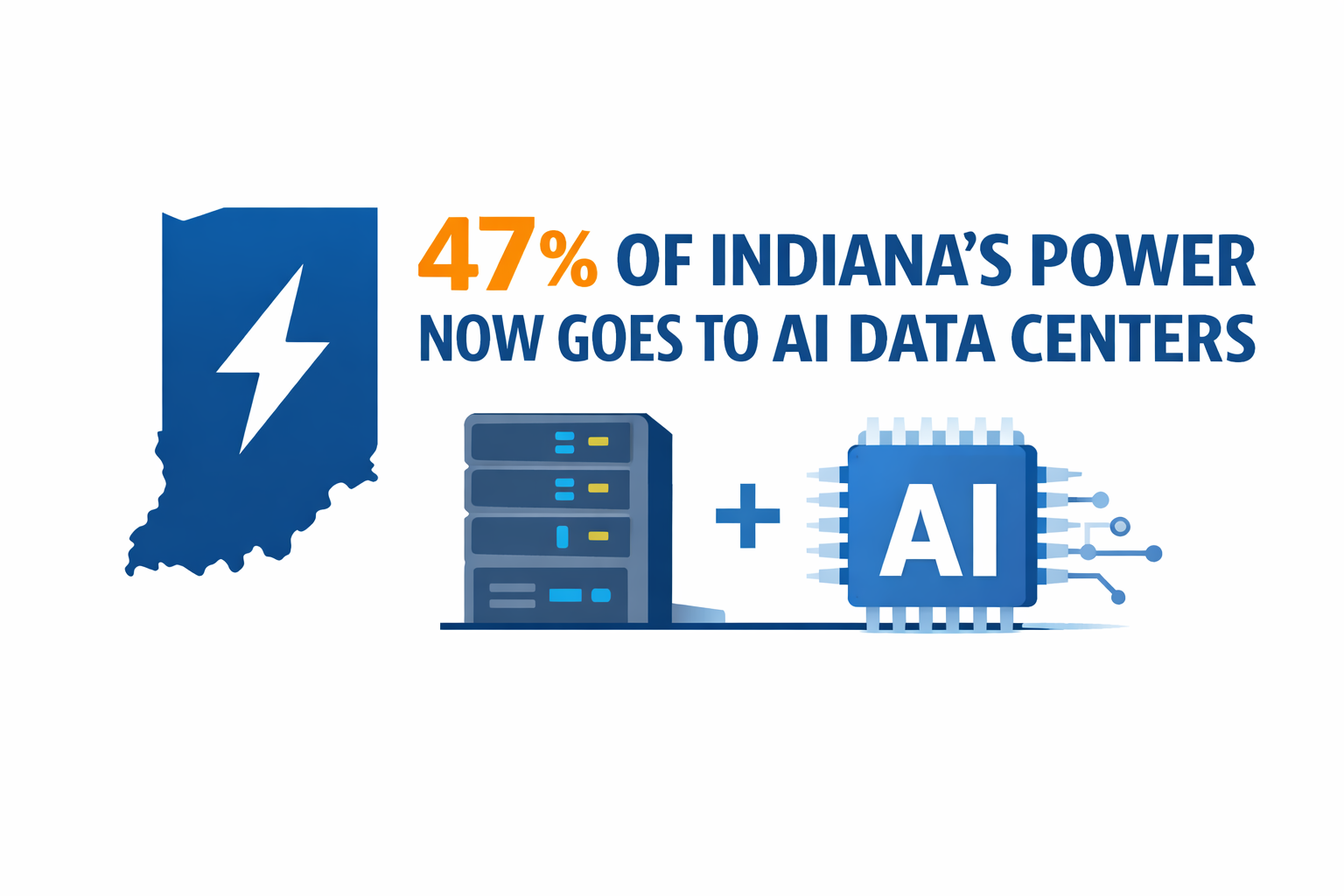
(INDIANA) - Indiana leads the nation in electricity use tied to artificial intelligence, with AI-driven data centers consuming nearly half of the state's total power output, according to a new national analysis.
A January 2026 report from Texas Royalty Brokers shows Indiana ranks first among U.S. states for AI-related electricity consumption. The state's three major AI data center clusters use a combined 42.5 million megawatt-hours of power each year -- about 47.2% of Indiana's total electricity generation. That figure is nearly seven times the national average.
The report attributes Indiana's ranking to the rapid expansion of large-scale data centers, including facilities operated by major technology companies such as Google. Those campuses operate around the clock and draw enormous amounts of electricity to support AI model training and data processing.
"Global AI electricity consumption doubled every six months during the last two years, growing faster than any technology in history," said Eric Winegar, managing partner at Texas Royalty Brokers. He said the pace of growth highlights the need for significant investment in power generation and grid infrastructure.
On average, each of Indiana's AI clusters uses more than 14 million megawatt-hours of electricity annually, making them among the most energy-intensive AI operations in the country. Tennessee ranks second, with about 30% of its electricity devoted to AI, followed by states such as Wisconsin, Louisiana, Texas, and Ohio.
The report warns that AI-related power demand is accelerating nationwide and could reach historic levels. By 2030, global AI systems could consume as much electricity as the entire country of Japan currently uses.
Indiana's dominant position reflects both economic opportunity and growing strain on the power grid. Supporters say the data center boom brings jobs, private investment, and technological leadership. At the same time, the report notes that meeting future demand will likely require expanded power generation, transmission upgrades, and long-term planning by utilities and state leaders.
As AI continues to reshape the economy, the findings raise new questions about how Indiana will balance growth, reliability, and sustainability while supplying nearly half its electricity to data centers.